Crossing the Midline Activities for Preschoolers: Pediatric Occupational Therapy Guide
Does your child switch hands when drawing across a paper? Discover what crossing the midline means, why it predicts handwriting and reading success, and 6 clinical exercises for home.
“Quick Answer: Crossing the body's midline is the neurological ability to move a hand, foot, or eye across the imaginary vertical center line into the opposite space. Controlled by the corpus callosum connecting the cerebral hemispheres, midline integration is the fundamental developmental prerequisite for reading text left-to-right, scissors handling, and establishing dominant hand preference. Occupational therapy exercises combining cross-body gross-motor play with interactive bilateral digital puzzles accelerate midline mastery in children ages 2 to 6.
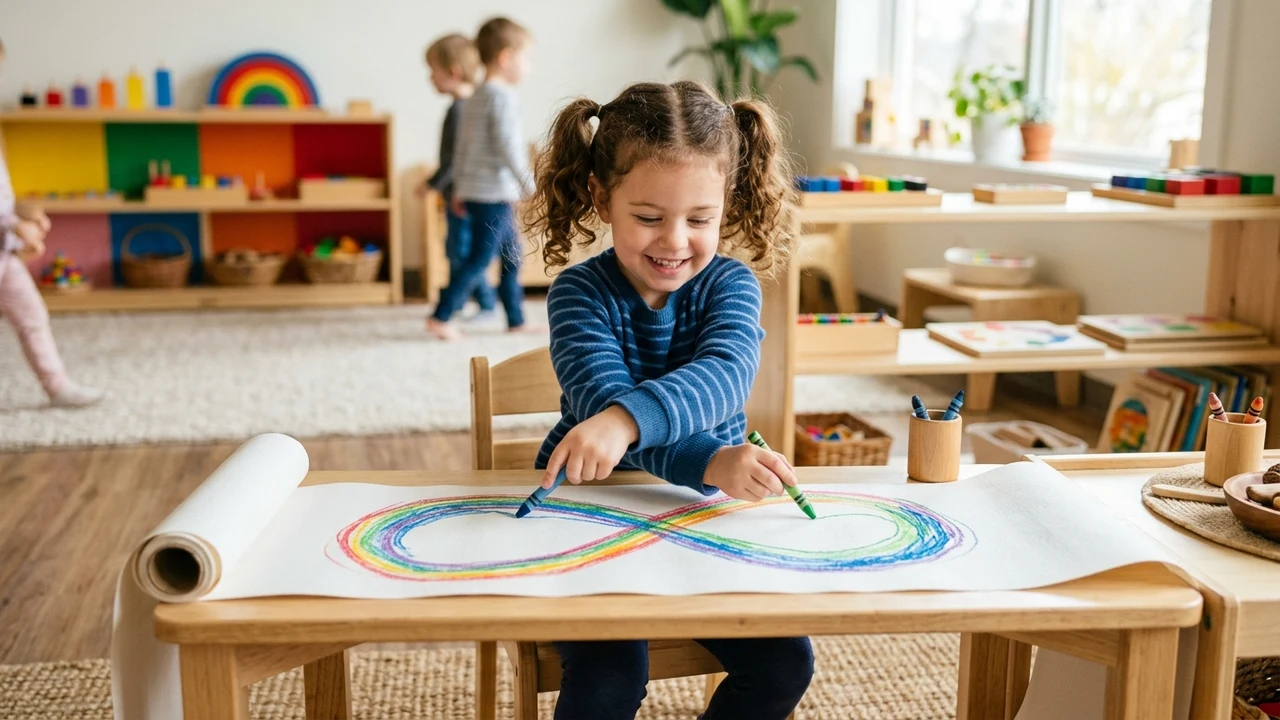
When your four-year-old is coloring a large sheet of paper, watch their hands closely. As their crayon moves from the right side of the page over toward the left, what happens?
Do they reach their right hand smoothly across the center of their chest to finish the stroke? Or do they stop in the center, awkwardly switch the crayon into their left hand, and continue?
If they switch hands to avoid reaching across, your child is displaying midline avoidance.
While common in babies and very young toddlers, persistent failure to cross the midline past age three is one of the most frequent red flags flagged by pediatric occupational therapists (OTs). It directly affects handwriting endurance, reading fluency, and physical coordination.
The Neuroscience of the Corpus Callosum
The human body is divided into left and right hemispheres, each regulated primarily by the opposite side of the brain. The corpus callosum—a dense bridge of more than 200 million nerve fibers—enables both hemispheres to communicate instantaneously.
Crossing the midline exercises this neurological bridge:
- 1Bilateral Motor Specialization: For a child to develop strong hand dominance (right-handed or left-handed), one hand must specialize as the skilled worker while the opposite hand stabilizes the surface. Midline avoidance leads to two "semi-skilled" hands with weak grip endurance.
- 2Visual Saccadic Tracking: Reading requires the eyes to track smoothly across the page without stopping in the middle. Children who cannot cross the motor midline often experience "visual hitches" at the center of a book page, causing them to lose their place or skip words.
- 3Core Stability and Bilateral Integration: Cross-body movements integrate primitive reflexes and lay the foundation for riding a bicycle, swimming, and climbing.
| Age Bracket | Developmental Midline Milestone | Warning Signs (Red Flags) |
|---|---|---|
| 12–24 Months | Reaches across body to pick up a favorite toy. | Uses only the hand closest to the object; rotates whole trunk instead of reaching. |
| 2–3 Years | Scribbles across full page; begins using non-dominant hand to stabilize paper. | Frequently swaps utensils or crayons mid-stroke to avoid center line. |
| 3–4 Years | Crosses midline during dance, games, and diagonal puzzles. | Struggles to catch a medium ball with both hands; clumsy during cross-lateral movements. |
| 5–6 Years | Smooth visual and motor tracking across midline; established dominant hand. | Loses place reading lines of text; difficulty cutting paper with scissors using one hand. |
6 Pediatric OT Exercises to Practice at Home
You do not need specialized clinic equipment to build bilateral coordination. Here are 6 high-yield activities:
- 1The Giant Infinity Walk (Figure-8): Draw a large horizontal figure-8 (∞) on the driveway with chalk or tape it on the living room floor. Have your child walk or drive a toy car along the track without turning their torso.
- 2Cross-Body Balloon Volleyball: Hang a balloon from the ceiling on a string. Challenge your child to bat it on their far left side using only their right hand, and vice versa.
- 3The Squeegee Mirror Wash: Spray safe water on a wide sliding glass door. Give your child a squeegee and ask for giant, unbroken "windshield wiper" sweeps all the way from left to right using one dominant hand.
- 4Windmill Toe Touches: Stand with feet shoulder-width apart, arms spread wide. Touch the right hand to the left foot, stand back up, then touch the left hand to the right foot.
- 5Flashlight Firefly Hunt: In a dim room, shine a flashlight beam across the walls. Have your child track and "catch" the light across their body line with their preferred hand.
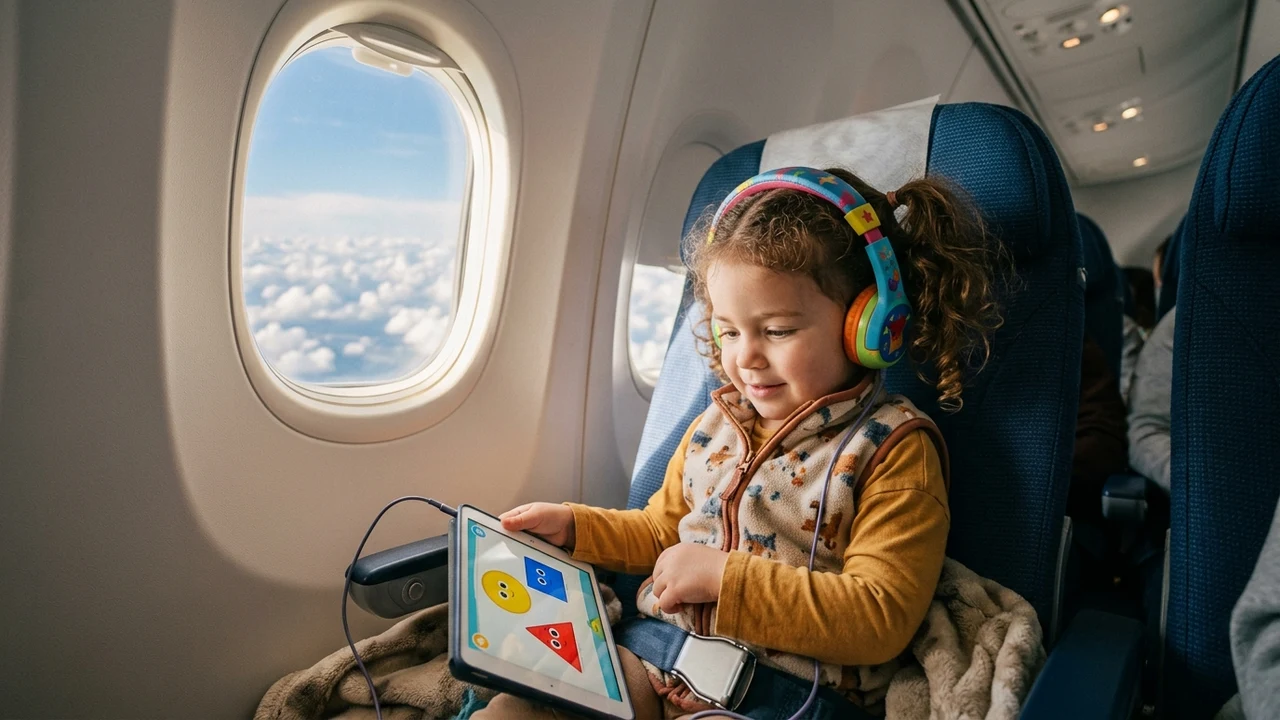
- 6Cross-Canvas Digital Puzzles (GenioKid): Traditional video games require tapping stationary buttons. GenioKid's Cognitive Playlands incorporate wide-canvas drag-and-drop mechanics where children must trace geometric paths, match phonetic tiles, and drag sorting objects across the central vertical screen axis.
Check Your Child's Motor & Cognitive Profile
Early intervention during the sensitive neuroplasticity window (ages 2–5) is up to five times more effective than remediation in elementary school:
👉 Take the 1-Minute Pediatric Development Quiz — receive an immediate milestone report covering fine motor, focus, and speech development.
🎮 Test-Drive Free Mini-Game Demo — try our bilateral tracing and memory puzzles directly in your browser.
🚀 Explore GenioKid's 8 Cognitive Playlands — designed by neuropsychologists to foster cross-hemispheric brain communication.
Frequently Asked Questions
What does "crossing the midline" mean in child development?
Crossing the midline refers to the ability to naturally reach an arm, leg, or eye across the imaginary center line dividing the left and right halves of the body into the opposite side's space.
Why is midline crossing crucial for reading and writing?
Reading requires the eyes to sweep continuously from left to right across the page. If the corpus callosum does not coordinate smooth midline tracking, the eyes hitch at the center of the visual field, leading to skipped lines, visual fatigue, and dyslexia-like reading frustration.
How does GenioKid help with fine motor coordination?
GenioKid games are designed with occupational therapy principles in mind: children drag, sort, and connect objects across the full width of the screen, strengthening bilateral coordination, finger isolation, and visual-spatial tracking within a safe 15-minute daily limit.
See How Your Child Responds to GenioKid
Test-drive our interactive neuro-game simulator right in your browser, or calculate your child's custom readiness plan in 60 seconds.