Toddler Airplane Activities: Pediatrician-Approved Guide to Flying Without Tantrums (Zero-WiFi)
Preparing for a flight with a toddler? Discover science-backed airplane activities, zero-WiFi offline apps, and an hour-by-hour routine that prevents sensory meltdowns at 30,000 feet.
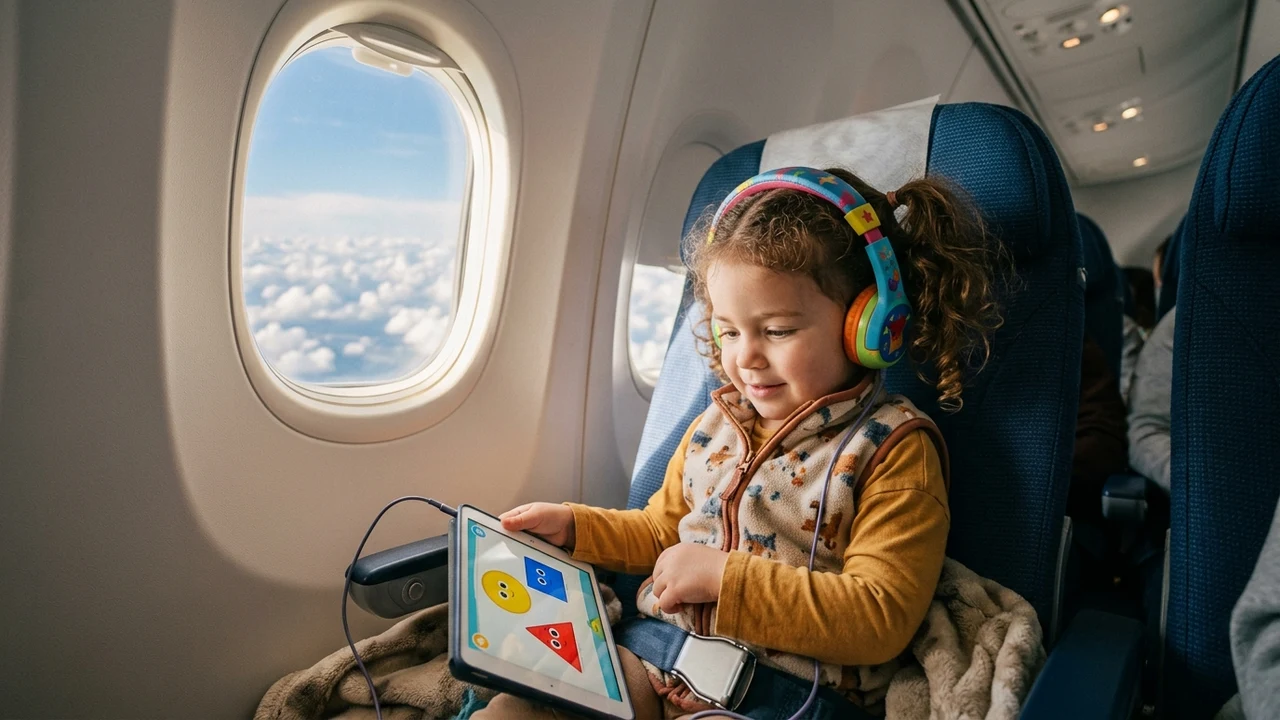
“Quick Answer: Flying with toddlers requires balancing physical sensory regulation with structured 15-minute cognitive micro-tasks. Pediatric neurologists recommend avoiding continuous fast-paced cartoon streaming, which induces vestibular motion sensitivity and post-flight dopamine crashes. Instead, pack mess-free tactile manipulatives and pre-download 100% offline, low-stimulation interactive games like GenioKid. Pair screen intervals with hydration and chewable snacks during altitude transitions to prevent ear pressure pain.
Boarding a packed commercial airliner with a two-year-old or spirited preschooler is one of the most high-stakes challenges in modern parenting. Between unfamiliar engine hums, fluctuating air pressure, restricted movement, and delayed departures, a toddler's sensory threshold is pushed to its absolute limit.
Most travel blogs offer generic advice: pack a mountain of Amazon toys and hand over an iPad. However, seasoned developmental specialists know that unrestricted, passive cartoon streaming on planes frequently backfires. Hypnotic videos overstimulate young visual cortices, elevate motion sickness, and trigger catastrophic meltdowns the moment headphones are removed for landing.
Here is the comprehensive, pediatrician-vetted Zero-WiFi Airplane Survival Protocol to keep your child calm, engaged, and cooperative on flights of any duration.
The Airplane Environment: Why Toddlers Dysregulate
To prevent in-flight tantrums, we must understand the neurological triggers unique to commercial cabins:
- 1Barometric Ear Compression: Toddlers possess narrow, horizontal Eustachian tubes. During descent and ascent, inability to equalize pressure causes acute pain, which manifests as inconsolable screaming.
- 2Vestibular-Visual Mismatch: Looking at rapidly shifting cartoon frames while the body detects physical turbulence creates sensory discord, leading to nausea and agitation.
- 3Restricted Gross-Motor Output: Young children regulate nervous systems through physical movement. Confinement to a 17-inch seat induces cortisol spikes and physical restlessness.
| In-Flight Activity Type | Vestibular Impact | Attention Endurance | Risk of Tantrum Upon Removal |
|---|---|---|---|
| Continuous Fast-Paced Video (YouTube) | High (Triggers nausea & sensory overload) | 45–60 mins (Hypnotic trance) | Severe (92% post-screen meltdown) |
| Random Physical Toys (Amazon Knick-Knacks) | Low | 3–8 mins per item (Drops on floor) | Moderate (Frustration from lost pieces) |
#1Interactive Neuro-Play (GenioKid Offline) | Balanced (Engages motor cortex & focus) | 15 mins structured intervals | Minimal (Gentle lullaby cutoff) |
| Tactile Sensory Bags (Tape, Stickers) | Calming | 15–20 mins | Low |
The Hour-by-Hour Flight Timeline Protocol
Successful family travel is built on rhythm, not improvisation. Follow this 4-phase cadence:
Phase 1: Boarding & Takeoff (Sensory Grounding)
- Do NOT bring out digital devices yet. Save screens as a secondary anchor.
- Offer a spill-proof straw cup, fruit puree pouch, or chewable dried fruit during the takeoff climb to encourage continuous swallowing, which naturally vents the Eustachian tubes.
- Introduce tactile painter's tape or suction toys that attach to the window.
Phase 2: Cruising Altitude (The 15-Minute Neuro-Play Window)
Once seatbelt signs turn off, engage the brain before fatigue sets in.
- Open GenioKid's Zero-WiFi Offline Mode. Because all assets are pre-installed, there are zero network timeouts or sudden ad interruptions.
- Target mini-games focused on visual-spatial tracing and bilateral coordination. These quiet, self-paced puzzles redirect attention away from cabin noise and strengthen cognitive focus.
“Pediatric Pro-Tip: Keep sessions capped at 15 to 20 minutes. GenioKid's built-in session timer automatically fades music and brings in a soothing character lullaby, signaling to the toddler that device time has concluded naturally without an argument.
Phase 3: In-Seat Movement & Tactile Snack Rotation
- Transition from screen to sensory play: reusable puffy stickers, dry-erase tracing cards, or threading pipe cleaners through a colander.
- High-protein, low-sugar snacks (cheese sticks, oat bites) prevent hypoglycemic adrenaline spikes.
Phase 4: Descent & Landing (Equalization & Comfort)
- 40 minutes prior to touchdown, the cabin begins pressurizing. Re-engage active swallowing.
- Put on familiar, calming audiobooks or soothing lullaby playlists through child-safe, volume-limited headphones.
Why 80% of "Offline" App Store Games Fail in the Air
Every parent has experienced the nightmare: you reach 30,000 feet, turn on Airplane Mode, hand the tablet to your toddler, and see: "Connection Error: Please reconnect to Wi-Fi to load content."
Commercial children's apps frequently use dynamic ad loaders, cloud assets, and server analytics that crash when offline.
- GenioKid is engineered 100% offline-first: Once installed, every single playland, sound effect, and developmental exercise operates smoothly without a single byte of cellular or Wi-Fi data.
- Zero In-App Purchases or Ad Traps: Toddlers cannot accidentally click banners or trigger subscription pop-ups that derail their play.
Interactive Readiness Check Before Your Flight
Before you pack your carry-on, evaluate your child's cognitive travel readiness:
👉 Take the 1-Minute Child Assessment Quiz — receive a personalized screen-time and developmental plan tailored specifically to your child's age.
🎮 Test-Drive GenioKid's Free Interactive Mini-Game — test your child's response to low-stimulation cognitive puzzles directly in your browser before downloading.
🚀 Explore All 8 Offline Cognitive Playlands — from Language Spark to Focus Friends, discover screen time designed by pediatric specialists.
Frequently Asked Questions
Can toddlers use headphones on an airplane?
Yes, provided they are volume-limiting headphones capped at 85 decibels (dB) in accordance with World Health Organization (WHO) and American Academy of Pediatrics (AAP) safety standards. Over-ear padded models are generally better tolerated than earbuds by children under five.
What should I do if my child screams during landing?
Do not panic or scold. Inconsolable screaming during descent is almost always driven by acute ear pain. Offer an immediate beverage through a straw, breastfeed, or offer a lollipop to trigger rapid swallowing. Massage the pressure points right beneath the earlobe along the jawline to assist lymphatic drainage.
How does GenioKid help during long road trips and flights?
Unlike passive video streaming that triggers restlessness, GenioKid engages active working memory and motor planning through calm, gentle micro-games. Its automated 15-minute timer ensures children transition smoothly back to physical books and window-watching without tantrums.
See How Your Child Responds to GenioKid
Test-drive our interactive neuro-game simulator right in your browser, or calculate your child's custom readiness plan in 60 seconds.