Understanding Child Neuropsychology: How Simple Exercises Can Boost Your Child's Development
Discover how everyday brain-based exercises can strengthen your child's focus, memory, language, and emotional development—through play.
Have you ever noticed how some children pick up new skills quickly while others need a bit more time and support? Every child is different, and much of that difference lies in how their brain develops and processes information. That's where child neuropsychology comes in—a fascinating field that helps us understand the connection between brain function and behavior, learning, and emotions.
But don't worry—this isn't just something for doctors and scientists. In fact, there are everyday things parents and educators can do to support a child's neuropsychological development. It starts with understanding what's happening inside that growing brain, and how the right kinds of exercises can strengthen it—just like muscles in the gym.
What Is Child Neuropsychology?
Child neuropsychology focuses on how a child's brain grows and changes, especially in the early years when development is happening at lightning speed. It looks at key functions like attention, memory, language, motor skills, and emotional regulation—and how these functions interact and influence a child's learning and behavior.
Unlike traditional psychology, which might focus more on emotions or behavior in isolation, neuropsychology takes a brain-based approach. It helps us ask, "Why is this child struggling to sit still?" or "What's making it so hard for them to follow instructions?" The answers often lie in how different parts of the brain are developing and communicating.
Why Exercises Matter
Think of the brain like a complex system of highways—neural pathways that carry information. The more a child uses these roads, the stronger and faster they become. That's why targeted exercises—when done consistently—can actually build and reinforce the brain's ability to handle everyday tasks.
The best part? These exercises can be simple, playful, and even fun. The goal isn't perfection. It's about gently strengthening weak areas while giving the brain the stimulation it needs to grow.
Key Skills Exercises Can Help Develop
1. Attention and Self-Regulation
Activities like "Simon Says," freeze dance, or even mindfulness games help kids practice paying attention, following rules, and controlling impulses. These skills are critical for success in school and relationships.
2. Memory and Sequencing
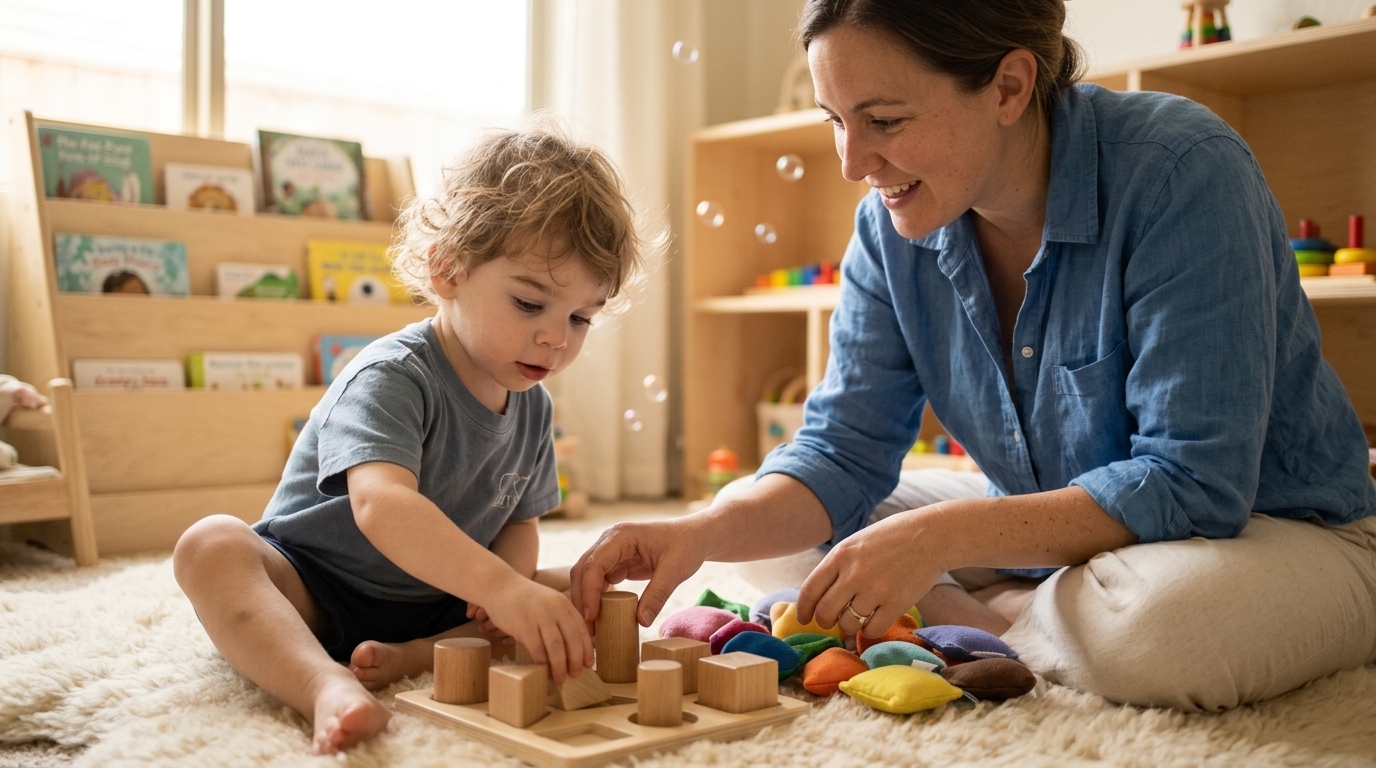
Simple tasks like repeating a pattern with colored blocks, clapping rhythms, or telling a story with pictures help children strengthen working memory and sequencing skills—both of which are essential for learning to read, solve problems, and follow multi-step directions.
3. Motor Coordination
Gross motor skills (like balance and coordination) and fine motor skills (like finger movements and hand control) can be supported through obstacle courses, drawing, threading beads, or playing with modeling clay.
4. Language and Auditory Processing
Rhyming games, storytelling, and sound matching help kids connect sounds with meaning. This supports early reading, listening comprehension, and verbal expression.
5. Emotional Awareness and Flexibility
Role-playing, emotion cards, and talking about daily feelings help kids learn to recognize and manage their emotions—an essential foundation for social development and mental well-being.
How Often Should You Do These Activities?
Consistency matters more than intensity. Even 10–15 minutes a day can make a real difference when the activities are targeted and engaging. The key is repetition—helping the brain form strong, lasting connections through gentle, consistent practice.
Final Thoughts
Child neuropsychology gives us powerful insight into how kids think, feel, and grow. And the beauty of it is that the most effective tools are often the simplest: play, movement, rhythm, and connection.
As adults—whether we're parents, teachers, or caregivers—we have an incredible opportunity to support children not just academically, but neurologically. With the right exercises, we're not just teaching skills. We're shaping brains.
See How Your Child Responds to GenioKid
Test-drive our interactive neuro-game simulator right in your browser, or calculate your child's custom readiness plan in 60 seconds.