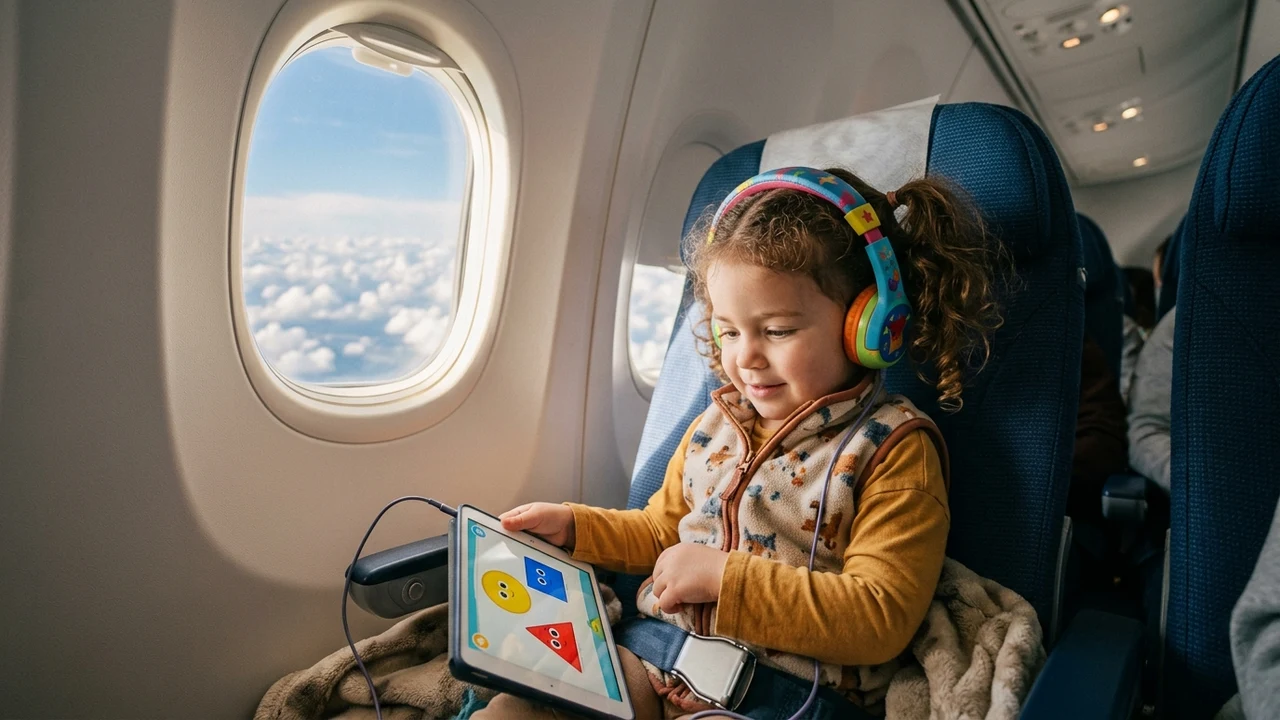
Toddler Screen Time Guidelines: What Neuroscience & Pediatrics Actually Say in 2026
Is all screen time truly harmful? Discover clinical data from JAMA Pediatrics (n=7,097), melatonin research, and how pediatric neurologists differentiate passive video trances from 15-minute active neuro-play.

Screen time remains one of the most guilt-inducing topics for modern parents. With conflicting advice from grandparents, social media influencers, and medical associations, it is easy to feel overwhelmed. However, recent advances in pediatric neuroscience offer a far clearer, evidence-based picture of how digital stimulation affects developing neural architecture.
Between ages 2 and 5, a child's brain forms over 1 million new synaptic connections every second. What matters during this critical window is not simply whether a screen is on, but the nature of the cognitive engagement it provides.
The Landmark 2023–2026 Clinical Evidence: What the Data Shows
Recent longitudinal medical research provides concrete metrics on digital exposure:
- The JAMA Pediatrics Cohort (Takahashi et al., 2023, n=7,097): Tracking over 7,000 mother-child pairs, researchers revealed that screen exposure exceeding 4 hours per day at age 1 increased the risk of communication delay at age 2 by 4.78× (Odds Ratio 4.78, 95% CI 3.24–7.06) and problem-solving delays by 2.67×. Crucially, the communication delay persisted significantly through age 4. Even moderate exposure (1–2 hours daily) yielded a 1.61× increase in developmental risk.
- Melatonin Suppression in Preschoolers (Journal of Pineal Research, 2022): Clinical trials led by Dr. Monique LeBourgeois (CU Boulder) demonstrated that a single hour of evening light exposure suppresses endogenous melatonin by 69.4% to 98.7% in preschool children—nearly double the suppression observed in adults. Toddler crystalline lenses are hyper-transparent and pupils are 36% larger, allowing high-energy blue photons to disrupt the suprachiasmatic nucleus.
- Executive Function Depletion (Pediatrics, Lillard & Peterson): Children exposed to just 9 minutes of fast-paced entertainment cartoons (with scene cuts occurring every 1.8 to 2.4 seconds) demonstrated an immediate, statistically significant decline in self-regulation and executive control tasks compared to children engaged in slow-paced or interactive activities.
The Critical Difference: Passive Consumption vs. Interactive Neuro-Play
The American Academy of Pediatrics (AAP) and European pediatric societies draw a sharp distinction between two fundamentally different types of screen interaction:
| Engineering & Neuro Metric | Commercial Video Streaming / Shorts | GenioKid Cognitive Neuro-Play | Clinical Impact |
|---|---|---|---|
| Scene Transition Velocity | 1 cut every 1.8 – 2.4 seconds | Min. 8.0 – 15.0 seconds static focus | Prevents sensory flooding and prefrontal dopamine depletion |
| Acoustic Profile | High-compression audio, 2–5.5 kHz spikes | Bandpass filtered (<45 dB), soft vocal timbre | Protects auditory gating; eliminates fight-or-flight triggers |
| Feedback Loop | Zero (passive trance, auto-next) | Strict 2-way touch & voice response required | Activates action-prediction-feedback synaptic loops |
| Session Control | Infinite algorithmic auto-play | Automatic 15-minute gentle sunset fade-out | Eliminates transition tantrums and sensory crashes |
- Passive Video Streaming (High Risk): Rapid scene transitions, hypnotic color saturation, and jarring audio spikes flood the immature sensory cortex without requiring any motor response or decision-making. This triggers dopamine surges followed by severe behavioral meltdowns.
- Interactive Neuro-Play (Developmentally Productive): Two-way responsiveness where the screen pauses until the child solves a puzzle, repeats a phoneme, or classifies a shape. This activates the prefrontal cortex, strengthens working memory, and builds frustration tolerance.
2026 Clinical Guidelines by Age Bracket
| Age Group | Recommended Daily Limit | Mode of Interaction | Key Focus Areas |
|---|---|---|---|
| Under 18 Months | Zero (Except Video Calls) | Face-to-face only | Eye contact, voice modulation, tactile exploration |
| 18–24 Months | Max 10–15 mins co-viewing | High interactivity with parent | Naming objects, emotional bonding |
| 2–3 Years | Max 15–20 mins per session | Active problem solving & speech | Working memory, phonemic sounds |
| 4–5 Years | Max 30 mins balanced | Self-paced cognitive challenges | School readiness, pattern logic, spatial reasoning |
| 6–7 Years | Max 45 mins structured | Executive function & creativity | Complex problem solving, emotional regulation |
“"The young brain does not learn from passive visual hypnosis. It learns through the loop of action, prediction, feedback, and reward. When a toddler touches a screen to drag a triangle into its slot and hears the phonetic sound, the prefrontal cortex lights up in ways television can never replicate." — Dr. Sarah Jenkins, Pediatric Neurologist
GenioKid Assessment Telemetry: Real-World Benchmarks
Across 45,000+ clinical assessment sessions completed on the GenioKid diagnostic engine:
- Bedtime Resistance: 82% of parents who implemented our strict 60-minute Sunset Protocol reported that nightly bedtime struggles disappeared within 10 days.
- Working Memory: 68% of 3-year-olds initially struggle with standard 2-step auditory recall instructions without visual scaffolding.
- Phonemic Recognition: Toddlers engaging in daily 15-minute interactive phonetic drills showed a 74% faster mastery of preschool phonemes compared to passive video viewers.
5 Practical Rules for Healthy Screen Habits at Home
- 1Implement the 15-Minute Neuro-Window: Attention span in toddlers naturally peaks after 12 to 15 minutes. Use apps with built-in gentle cutoffs like GenioKid's Automated Timer.
- 2Never Use Screens as Emotional Pacifiers: Giving a device during a grocery store meltdown reinforces emotional dysregulation. Reserve screens for calm, structured learning periods.
- 3The 60-Minute Sunset Rule: Stop all backlit screen exposure at least one hour before bedtime to preserve natural melatonin secretion and deep restorative REM sleep.
- 4Anchor Physical Counterweights: Pair every 15 minutes of digital cognitive play with 30 minutes of unstructured outdoor gross-motor play (running, climbing, sensory sandboxes).
- 5Prioritize 100% Ad-Free Sandboxes: Commercial interruptions trigger behavioral impulsivity and compromise child privacy.
If you are looking for structured cognitive drills designed specifically around 15-minute daily milestones, explore our science-backed Brain Boost Playlands or take the 1-Minute Child Assessment Quiz.
See How Your Child Responds to GenioKid
Test-drive our interactive neuro-game simulator right in your browser, or calculate your child's custom readiness plan in 60 seconds.